Music is more than entertainment. It can help children remember what they learn, express their emotions, develop creativity, and engage more actively in the classroom. From nursery rhymes in preschool to rhythmic activities that reinforce lessons in primary and secondary school, music can make learning a more enjoyable and meaningful experience.
At King’s Gift School, we recognise the importance of creating learning experiences that nurture the intellectual, social, emotional, and creative development of every child.
But why is music such a valuable part of education, and how can it make a difference in a child’s learning journey?
1. Music Makes Learning More Engaging
Every parent and teacher knows that keeping children interested in a lesson can sometimes be challenging. Music offers a creative way to capture their attention and encourage active participation.
Songs, rhymes, clapping games, and rhythmic activities can transform ordinary lessons into memorable experiences. Children can sing the alphabet, learn numbers through counting songs, or explore new vocabulary through repetition and melody.
These activities encourage children to participate rather than simply listen. When lessons are engaging, children may be more willing to ask questions, practise new skills, and explore unfamiliar ideas.
At King’s Gift School, incorporating creative approaches to learning helps make the classroom a place where curiosity and participation are encouraged.
2. Music Can Support Memory and Retention
Have you ever found yourself remembering the lyrics of a song you heard years ago? Music has a remarkable ability to make words, patterns, and sequences memorable.
In the classroom, teachers can use songs and rhythms to reinforce concepts that children need to remember. Multiplication tables, spelling patterns, historical facts, and language exercises can become easier to practise when paired with rhythm or melody.
Repetition is an important part of learning, and music can make that repetition feel less like a task and more like play.
For preschool and primary school pupils, simple educational songs can help reinforce foundational skills. For junior and senior secondary school students, carefully chosen musical activities can support revision, language learning, and recall of key concepts.
Although music does not automatically improve every child’s memory or academic performance, it can be a useful teaching tool when matched to the lesson and the learner’s needs.
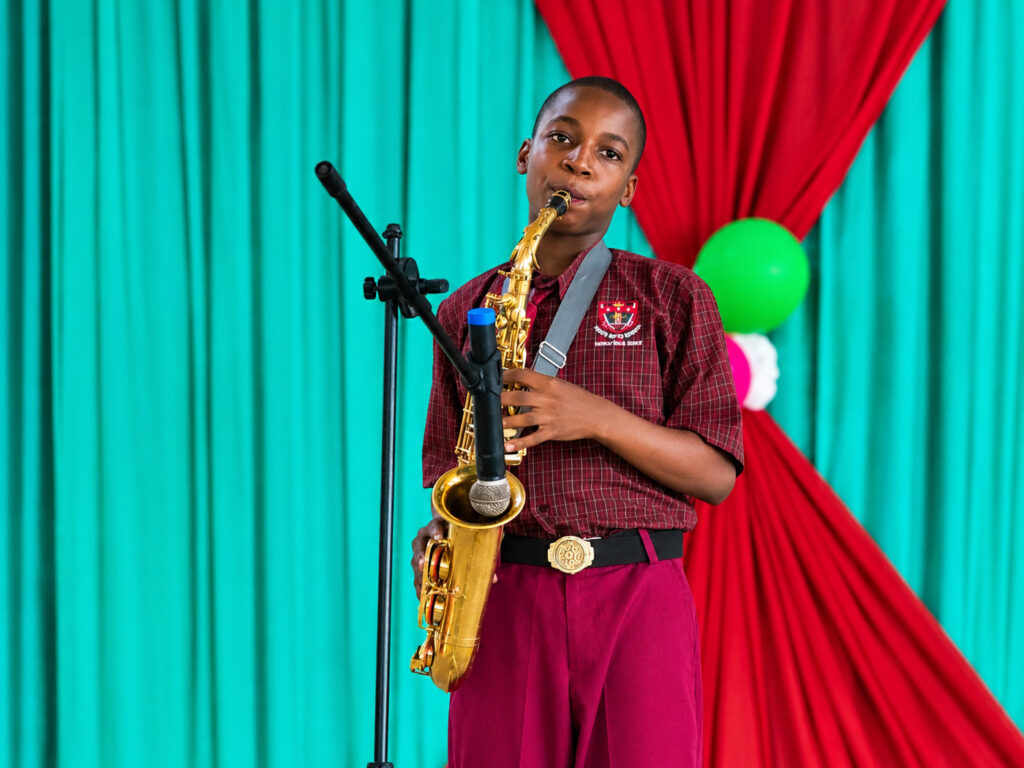
3. Music Supports Language and Communication Skills
Language development begins long before a child learns to read and write independently. Babies and young children respond to sounds, voices, rhythm, and repetition, making music a valuable part of early learning.
Nursery rhymes and songs expose children to new words, sound patterns, rhyming words, and sentence structures. Singing together also encourages listening, pronunciation, and verbal expression.
For children in daycare and preschool, these activities can support early literacy and communication. As pupils progress through primary and secondary school, music can provide opportunities to explore vocabulary, interpret lyrics, discuss meaning, and express ideas confidently.
When children listen carefully, sing along, or create their own verses, they practise different aspects of communication in an enjoyable and interactive way.
4. Music Encourages Creativity and Critical Thinking
Education should prepare children not only to remember information but also to think independently, solve problems, and develop original ideas.
Music provides opportunities for children to experiment, make choices, recognise patterns, and express themselves creatively. A simple classroom activity might involve creating a rhythm with claps, composing a short song about a science topic, or working together to perform a musical piece.
These experiences encourage imagination and problem-solving. They can also help children understand that there may be several ways to approach a task or communicate an idea.
At every stage of education, from preschool to senior secondary school, opportunities for creative expression can contribute to a more balanced learning experience.
5. Music Helps Children Develop Social Skills and Teamwork
Making music together teaches children how to listen to others, take turns, follow instructions, and work towards a shared goal.
During a group performance, every participant has a role to play. Children learn that timing, cooperation, and attention to others matter just as much as individual contribution.
These lessons extend beyond the music classroom. They can help children practise patience, respect, collaboration, and responsibility in other learning environments.
Group singing, musical games, school performances, and coordinated rhythmic activities can therefore provide opportunities for children to develop important interpersonal skills while enjoying the learning process.
6. Music Can Support Emotional Well-Being
Children experience a range of emotions as they grow, learn, and interact with others. Music can offer a positive outlet for expressing feelings and managing everyday stress.
A calming song may help create a peaceful atmosphere during a quiet activity, while an upbeat rhythm can energise children during movement breaks. Singing and playing instruments can also give children a way to express themselves when they find it difficult to put their feelings into words.
Music is not a substitute for appropriate emotional or professional support when a child needs it. However, thoughtfully planned musical activities can contribute to a welcoming classroom atmosphere where children feel encouraged to participate and express themselves.
For teachers, understanding how music affects the mood and energy of a classroom can help them choose activities that suit the learning environment.
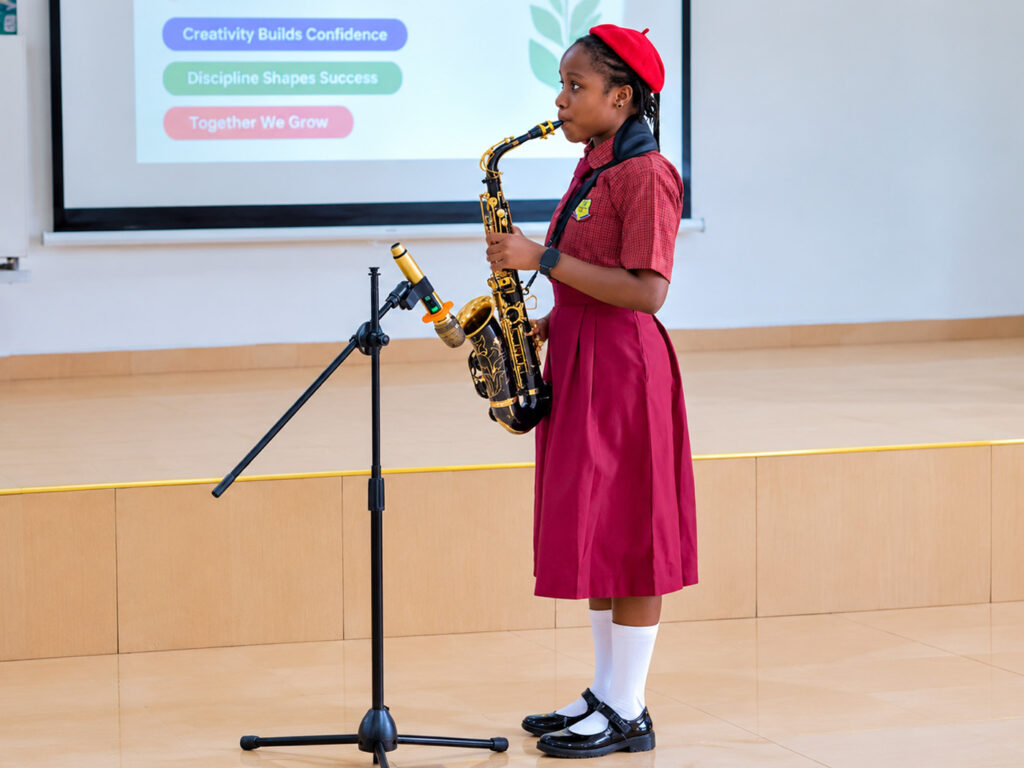
7. The Benefits of Music at Every Stage of Education
Children’s learning needs change as they grow. Music can be adapted to suit their developmental stage, making it a flexible resource across different levels of education.
Daycare and Preschool: Learning Through Sound and Play
For babies, toddlers, and preschoolers, songs, nursery rhymes, movement, and simple rhythm games introduce early learning concepts in an accessible way.
These activities can encourage listening, language development, coordination, and social interaction. They also give young children opportunities to explore sounds and express themselves.
Primary School: Making Foundational Learning Memorable
Primary school pupils are developing essential skills in reading, writing, mathematics, and communication. Songs, rhythm patterns, and musical games can reinforce these skills through repetition and active participation.
Teachers can use music to introduce topics, practise spelling, reinforce number sequences, and make classroom activities more interactive.
Junior Secondary School: Building Confidence and Collaboration
At the junior secondary school level, students can explore more complex musical activities that encourage teamwork, creative thinking, and self-expression.
Group projects, rhythm exercises, and discussions about music can also provide opportunities to develop listening skills, presentation skills, and appreciation for different cultures.
Senior Secondary School: Encouraging Expression and Independent Thinking
Senior secondary school students can engage with music through creative projects, performance, cultural studies, and critical discussions about lyrics and musical styles.
These activities can encourage independent thought, cultural awareness, collaboration, and personal expression. When integrated appropriately, they can complement academic learning and contribute to students’ wider development.
8. Simple Ways Teachers Can Bring Music into the Classroom
Incorporating music into education does not require an elaborate music studio or expensive equipment. With a little creativity, teachers can introduce meaningful musical activities into everyday lessons.
Here are some practical ideas:
- Use educational songs: Reinforce the alphabet, number sequences, spelling, and other foundational concepts through songs.
- Introduce rhythm breaks: Use clapping patterns or short movement activities to give pupils a brief change of pace between lessons.
- Encourage group singing: Help children practise listening, coordination, and participation through familiar songs.
- Connect music to academic subjects: Use rhythm to explore patterns in mathematics or songs to introduce vocabulary and language concepts.
- Explore cultural music: Introduce students to traditional Nigerian music and musical traditions from other cultures to encourage cultural appreciation.
- Give children opportunities to create: Let pupils compose simple lyrics, invent rhythms, or develop short performances related to classroom topics.
- Match music to the learning objective: Choose activities that reinforce the lesson rather than distract from it.
The goal is not to fill every classroom moment with sound. It is to use music intentionally, at the right time, to support learning.
9. Why a Well-Rounded Education Matters at King’s Gift School
A child’s education involves more than academic results. Children also need opportunities to develop confidence, creativity, communication skills, positive relationships, and a lasting interest in learning.
At King’s Gift School in Ago-Iwoye, Ogun State, we recognise the importance of supporting children’s development throughout their educational journey. From daycare and preschool to primary, junior secondary school (JSS), and senior secondary school (SSS), every stage presents opportunities to build knowledge, discover interests, and develop essential life skills.
Music is one example of how creative experiences can complement classroom instruction. When children are encouraged to explore, participate, ask questions, and express themselves, learning becomes more than the acquisition of facts. It becomes an opportunity to develop skills and attitudes that can serve them throughout life.
Parents looking for a school in Ago-Iwoye can consider how an educational environment supports both academic progress and the wider development of their children.
Every Classroom Can Benefit from a Beat
Music has the potential to make learning more engaging, support memory, encourage language development, inspire creativity, and strengthen social connections. When used thoughtfully, it can help teachers create lessons that appeal to different learning needs and give children more opportunities to participate.
From the first nursery rhyme in daycare to collaborative musical activities in secondary school, the value of music lies in how it supports the wider learning experience.
At King’s Gift School, King’s Avenue, Off Awolowo Road, Ago-Iwoye, Ogun State, we believe that helping children grow involves nurturing more than their academic abilities. It means creating opportunities for them to learn, explore, communicate, and develop confidence as they prepare for the future.
Because sometimes, a little rhythm can make a big difference in the way a child learns.
Looking for a school in Ago-Iwoye for your child? Discover King’s Gift School and explore our daycare, preschool, primary, junior secondary, and senior secondary school programmes.
Location: King’s Avenue, Off Awolowo Road, Ago-Iwoye, Ogun State, Nigeria.
Contact King’s Gift School to learn more about our educational programmes and the learning opportunities available for your child.